
Middle school athletes are training more hours than ever — and becoming more fragile because of it.
Here's what's really going wrong, and what we can do.
I see it every week. A parent calls, worried. Their 13- or 14-year-old has been playing soccer or basketball since age eight. The sports medicine doctor or pediatrician has flagged an injury. Someone in the chain — a coach, a doctor, a fellow parent — has said, "they need to strengthen their body." And now they're in my office, expecting me to fix in one appointment what took years to develop.
I can't. And honestly? Trying wouldn't be fair to anyone. Because the problem isn't just the injury. The problem is a system that has quietly failed our young athletes — and most families don't know it yet.
How we got here: the breakdown nobody talks about.
The path from "active kid" to "injured athlete" follows a remarkably consistent pattern. Once you see it, you can't unsee it.
The cycle of physical neglect in youth sport:
Schools no longer staff P.E. specialists. "Gym class" has become jogging laps and free play — no instruction in fundamental movement skills.
Kids arrive at adolescence without a foundation: no real strength, no body control.
Families turn to organized sport to fill the gap — youth leagues, club teams, travel squads — coached by well-meaning volunteers, not physical therapists, athletic trainers, strength and conditioning coaches.
Practices grow longer and more frequent. The focus is sport-specific skills: shooting, passing, positioning. But nobody is teaching kids how to run, land, decelerate, or control their own body.
By age 9 or 10, kids are separated from the heard and labled as "elite." Parents invest MORE of everthing (including money) — practices, games, year-round play. All of which results in early specialization in a single sport.
By 13 or 14, these kids are logging 12+ hours per week of high-intensity sport with NO strength training, NO neuromuscular development, NO recovery plan.
A chronic overuse injury develops. Or, worse case, an ACL tears.
What we see in the Clinic:
Early sport specialization, without a foundation of strength, neuromuscular control and body awareness, does the opposite. It narrows movement patterns, increases repetitive stress, and leaves the body unable to handle the demands placed on it.
When a 13-year-old has played one sport year-round for four years, trained with coaches focused on specific skills and winning, without learning how their body moves. They are underdeveloped in every dimension that matters for long-term health and athletic longevity.
What we should be doing instead:
The solution isn't to stop sport.
It's to build the foundation sport is supposed to rest on. For middle school athletes, that means:
What a healthy youth athletic program includes:
✓ Fundamental movement skill training — running mechanics, landing patterns, deceleration control, balance and spatial awareness.
✓ Age-appropriate strength development — bodyweight progressions before external load. Building tissue resilience, not performance metrics.
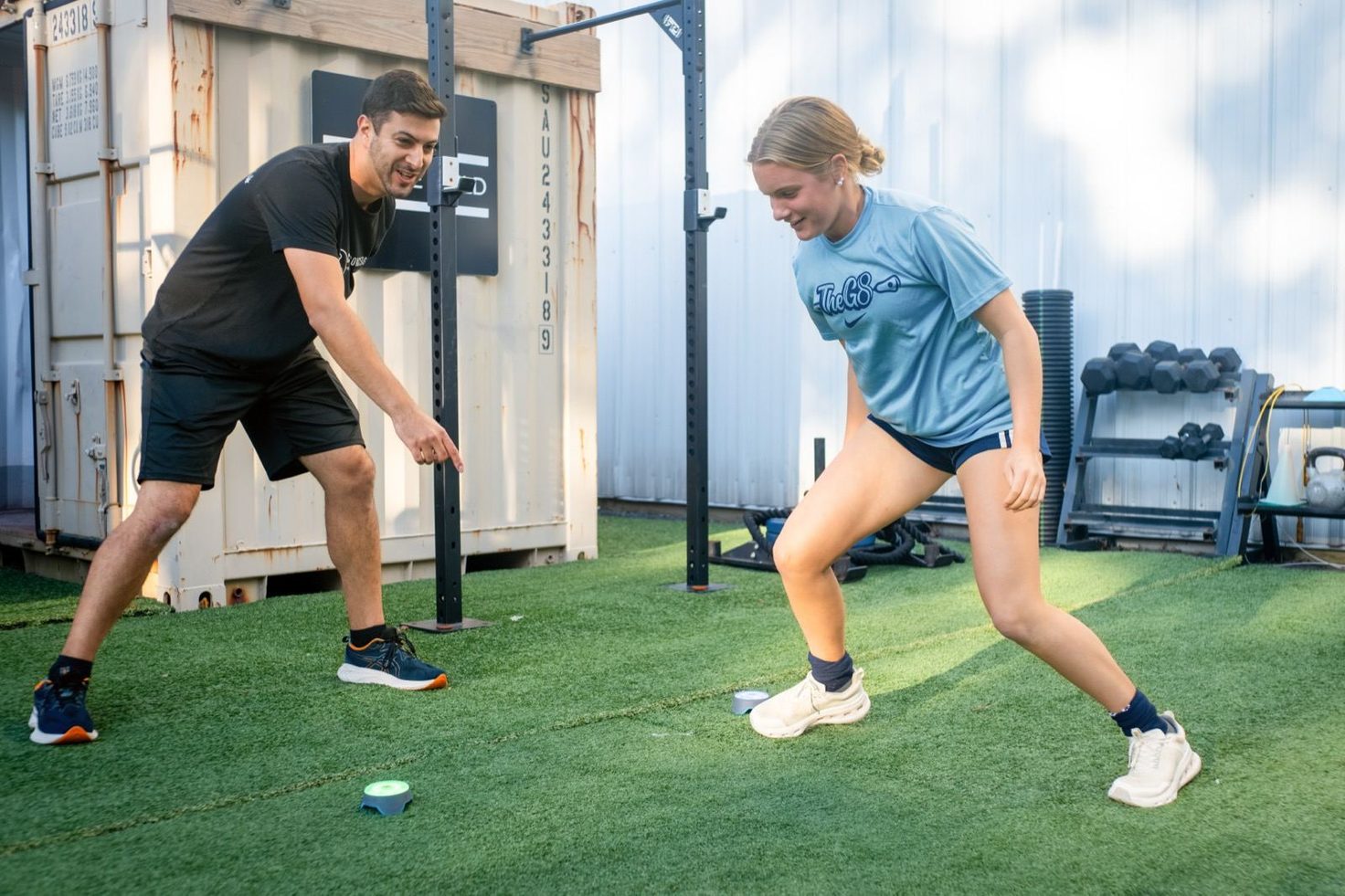
✓ Neuromuscular coordination work — reactive drills, multi-directional movement, proprioceptive training. The stuff that actually prevents ACL tears.
✓ Planned rest and multi-sport exposure — rest weeks, off-seasons, and varied movement contexts protect the developing body and brain.
✓ Capped training volume — a useful rule of thumb: weekly sport hours should not exceed a child's age in years. A 12-year-old should not train 12+ hours per week in a single sport.
What you can do right now:
If you have a middle school athlete at home, here are the most important questions to ask:
Does your child's program include any dedicated strength or movement training — not just sport-specific drills?
Does your child have a genuine off-season?
Can they land from a jump on one leg without losing balance?
Do they complain of chronic soreness, fatigue, or nagging pain that never fully resolves?
If you're concerned, don't wait for the injury to prompt the conversation. A movement screening now — looking at fundamental patterns, strength, reactive stability, and load tolerance — can identify gaps before they become problems.
This is exactly the kind of preventative assessment we offer at Cape Concierge Physical Therapy. Not rehab. Not crisis management. A proactive look at where your child's physical foundation actually stands, and a practical plan to build it.
Please share this with your club coaches, youth coaches, friends and family members. We can change the future of youth sports if we work together.