
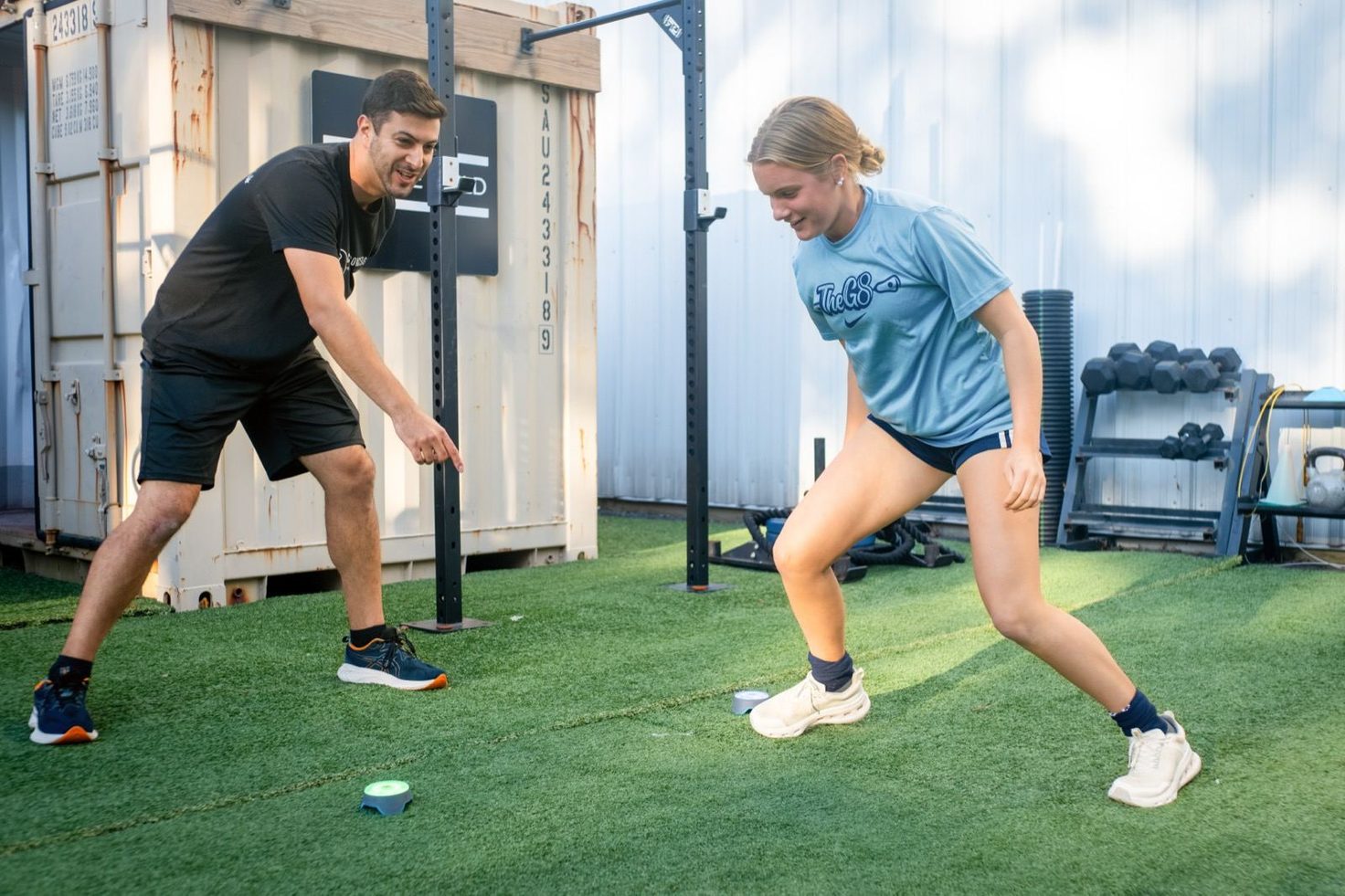
Should high school athletes participate in strength training?
The short answer is YES! But let’s dive a little deeper…
High school athletes face the challenge of balancing academics, sports, and personal development during a time when their hormones are changing, bodies are growing, and minds are learning. At this age, strength training under the guidance and supervision of a strength and conditioning progressional can begin to lay the groundwork for the rest of their lives.
Strength training enhances athletic performance.
Almost every sport requires strength, endurance, neuromuscular coordination, power, and speed. Lifting weights or performing resistance exercises helps build stronger muscles, tendons, and ligaments, which translates into better performance on the field. The addition of resistance training to an adolescent program may better prepare the young athlete to handle the duration and magnitude of unanticipated forces that develop in practice and game situations. Youth athletes can improve strength by 30% to 50% after just 8 to 12 weeks of a well-designed strength training program. Strength training provides the physical foundation that allows athletes to excel in their sport.
It is the key to minimizing injury.
Many high school athletes experience overuse injuries, sprains, or strains due to weak stabilizing muscles or poor movement mechanics. A well-designed strength training program corrects muscular imbalances and strengthens the joints - reducing the risk of injury. Stronger muscles support bones and connective tissues, meaning athletes are better able to withstand the demands of their sport. Some studies have shown a reduction of ACL injuries by 50-60% following a strength and neuromuscular training program.
Beyond physical advantages, strength training also improves mental health and confidence.
As athletes see progress—lifting heavier weights, running faster, jumping higher or performing more challenging exercises—they gain a sense of accomplishment. This confidence often carries over into other areas of life, including academics, social relationships, and leadership. Moreover, strength training can reduce stress and anxiety by releasing endorphins (the body’s natural mood boosters) as well as improve sleep and energy which are vital in this stage of their lives. Developing a consistent workout routine teaches consistency, structure and resilience - traits that serve athletes well both on and off the field.
Strength training supports lifelong health.
Starting a strength training routine in high school builds habits that can last a lifetime. It promotes bone density minimizing the risk of osteoporosis, supports a healthy metabolism, and reduces the risk of chronic diseases later in life. Adolescents who establish regular exercise habits are more likely to continue them into adulthood.
Debunking the myths.
There has been a large concern regarding epiphyseal growth plate fractures in young athletes. The growth plate can be 3-5 times weaker than surrounding connective tissue and it may be less resistant to shear and tension forces; however, growth plates typically close around the time of puberty. Injury to this area typically occur with misuse of equipment and when there is a mis-match between training loads being applied and the athlete’s biological age (skeletal age, physical maturity, and sexual maturation) and training age (the length of time an athlete has consistently followed a formal and supervised resistance program). There has not been any reported epiphyseal growth plate fractures when an athlete is adhering to the established training guidelines. Participation in almost any type of sport or recreational activity carries a risk of injury - a well supervised strength program poses no greater risk.
Ready to start? Let's go. Contact Cape Concierge Physical Therapy.