
One of the podcast episodes I find myself sharing with patients most often is this one from The Ready State — so I figured it was time to share it with all of you, too.
If you still picture creatine as a tub of powder on a college linebacker's shelf, it's time for an update. I recently caught an episode of The Ready State Podcast featuring Dr. Darren Candow — Professor and Director of the Aging Muscle and Bone Health Laboratory at the University of Regina — and it completely reframed how I talk to my patients about this supplement. Dr. Candow has authored well over 100 peer-reviewed studies on creatine, and his focus isn't performance in your 20s — it's musculoskeletal aging, fall and fracture risk, and how we protect strength, bone, and brain as we get older.
For the women I work with — many of you navigating perimenopause, menopause, or just trying to stay strong and injury-free for the long haul — this episode is directly relevant. Here's what stood out.
What Creatine Actually Is
Creatine is a compound your body already makes in the kidneys and liver from three amino acids. About 95% of it lives in muscle, with the rest in bone and brain tissue. Its main job is helping regenerate ATP — the energy currency your cells run on. You get some from diet (mostly red meat and seafood), but supplementation is how you meaningfully raise your levels, especially if you eat little or no meat.
Myth vs. Fact
This is the section I wish every patient could hear directly from Dr. Candow:
Myth: Creatine causes hair loss. No solid research supports this claim.
Myth: Creatine dehydrates you or damages your kidneys. Not supported in healthy individuals — in fact, the water retention creatine causes is intracellular, meaning it's pulling water into the muscle cell, which actually supports muscle function rather than working against it.
Myth: You need to "cycle" creatine on and off. There's no evidence for this. Studies show it can be taken continuously — elevated muscle stores stay up for about a month after stopping, and brain stores for up to three months. The longest safety study ran two full years of daily use with no adverse effects.
Fact: It's one of the most well-researched supplements that exists. Dr. Candow places it among a very short list of supplements — five, by his count — with genuinely strong scientific backing.
The Benefits Go Well Beyond Muscle
Yes, creatine supports strength and power output. But the research Dr. Candow discussed extends much further:
Bone geometry and strength — directly relevant to anyone thinking about osteoporosis prevention
Glucose disposal, with implications for type 2 diabetes management
Cognitive function and brain health
Faster post-exercise recovery
Post-concussion recovery support
Resilience under sleep deprivation
This is exactly why creatine belongs in the same conversation as resistance training when we talk about longevity — it's not a "bonus," it's a tool that supports the muscle-as-longevity-organ framing I lean on constantly in this practice.
Dosing: Three Ways to Approach It
Dr. Candow laid out three practical strategies:
1.Loading phase — 20 grams per day for 7 days, for people who want to saturate muscle stores quickly.
2.Simple maintenance — 5 grams per day, sufficient for general health benefits.
3.Bodyweight-based dosing — roughly 0.1 g per kg of bodyweight, which typically lands around 7–10 grams daily.
Timing is flexible. Taking it after exercise, rather than alongside caffeine, may be slightly more effective, and pairing it with a protein shake or meal can enhance absorption. If water retention is a concern, skip the loading phase and start at a steady 3–5 grams a day instead.
Who Benefits Most
A few populations came up specifically:
Postmenopausal women — a group Dr. Candow's own lab studies closely, given the compounding effects of estrogen decline on both muscle and bone
Vegetarians and vegans, who typically start with lower baseline creatine stores and tend to respond well to supplementation
Older adults at risk for sarcopenia, especially when creatine is combined with resistance training — the two together outperform either one alone
Teens and younger athletes, where current research supports safety at appropriate doses, alongside benefits for performance, cognition, and concussion recovery — though checking in with a healthcare provider first is always reasonable
The Bottom Line
Creatine monohydrate has one of the strongest safety and efficacy profiles of any supplement on the market — and its benefits reach far beyond the weight room. For women thinking seriously about bone density, muscle preservation, and brain health through perimenopause and beyond, it's worth a real conversation rather than a dismissive eye-roll.
If you're curious whether creatine — or a broader strength and bone-density strategy — makes sense for where you are right now, that's exactly the kind of question we dig into during a Movement Physical. It's a great next step for putting research like this into an actual plan for your body.
Quality Matters
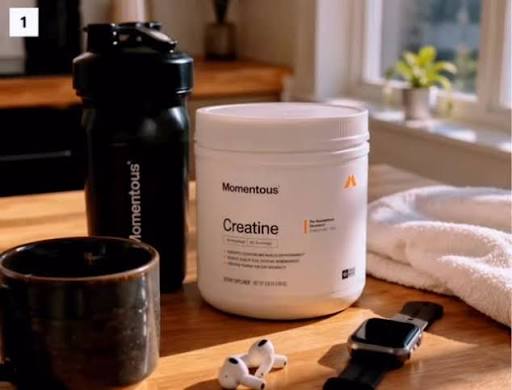
Momentous is a high-quality, trusted supplement brand known for its commitment to third-party testing, transparency, and science-backed formulations. Their creatine Is a highly researched and well-established form of creatine with no unnecessary fillers or proprietary blends. You can use this link to receive a total of 35% off a first time subscription, 10% off recurring subscriptions, or 14% off a one-time purchase.