
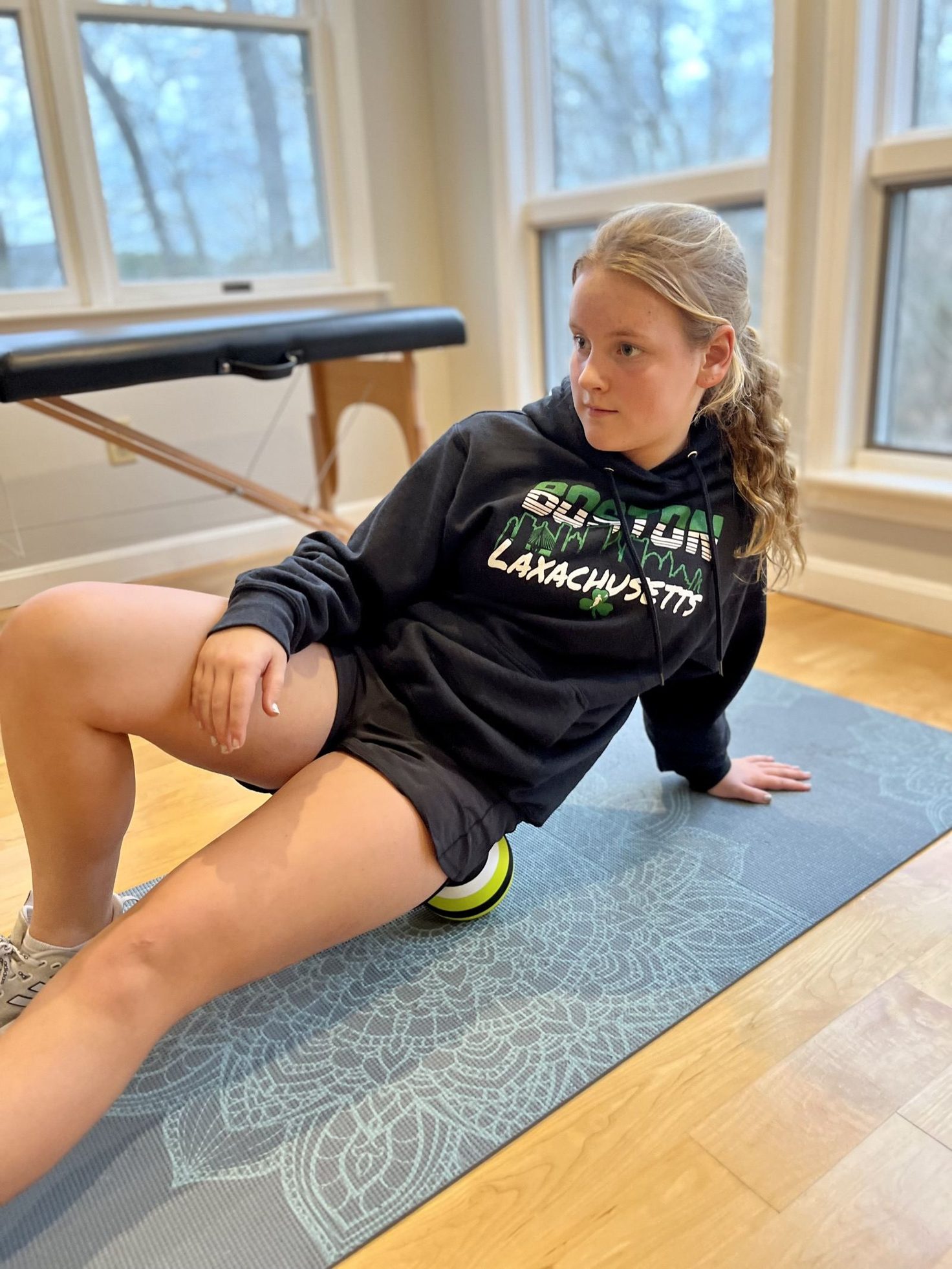
Is Your IT Band Really Tight?
If you’ve ever said, “My IT band is so tight,” or searched for the best IT band stretch, you’re not alone. This is one of the most common things we hear from patients dealing with hip, knee, or outer thigh discomfort.
But here’s the surprising truth: Your IT band is not tight and it actually can’t be stretched.
That might sound hard to believe, especially if it constantly feels uncomfortable or restricted. So let’s break down what’s really going on and, more importantly, what actually helps.
What Is the IT Band, Anyway?
The IT band (short for iliotibial band) is not a muscle. It’s a thick band of fibrous connective tissue that runs along the outside of your thigh, starting at your hip and traveling down to just below your knee.
Unlike muscles, connective tissue like the IT band isn’t designed to lengthen and shorten. Its primary role is to provide stability and transfer force between the hip and the knee as you walk, run, squat, or climb stairs.
In laboratory studies, when force is applied to the IT band, it either resists the load or fails under extreme stress but it does not stretch. This means that traditional stretching techniques and aggressive foam rolling aren’t actually lengthening the IT band, even if they temporarily change how it feels.
So Why Does It Feel Tight or Painful?
If the IT band doesn’t stretch, why does it feel so tight?
What you’re usually feeling is tension coming from the muscles that connect into it, most notably the gluteus maximus and the tensor fascia latae (TFL). These muscles play a huge role in controlling hip movement and stabilizing your pelvis and leg during activity.
When these muscles are weak, overworked, or not coordinating well with the rest of the body, the IT band can become overloaded. That overload often shows up as a tight, pulling, or burning sensation along the outside of the thigh or knee.
In other words, the IT band isn’t the problem... it’s the messenger.
Why Stretching Isn’t the Answer
A lot of people try to solve IT band discomfort with stretching because it feels like the logical solution. Unfortunately, fascia does not stretch in the way muscle does, so repeatedly trying to stretch it can be frustrating and ineffective.
Most of the “tightness” sensation is actually neuromuscular, meaning it’s related to how your nervous system and muscles are managing load and movement. This is why the sensation often improves more with strengthening and controlled movement than with passive stretching.
What Actually Helps the IT Band Feel Better
The key to changing how your IT band feels is improving how the hip muscles function. Targeted exercises that focus on hip strength, coordination, and control can significantly reduce the tension and discomfort people experience.
This often includes:
Improving hip stability during movement
Gradually increasing load tolerance so your body can handle activity more efficiently
When the muscles do their job better, the IT band is no longer overloaded and the tightness sensation fades.
How Physical Therapy Can Help
If IT band discomfort keeps coming back or limits your activity, working with a physical therapist can make a big difference. A therapist can assess how your hips, knees, and movement patterns are contributing to your symptoms and create a plan tailored specifically to you.
Rather than chasing stretches that don’t work, physical therapy focuses on building strength, control, and confidence in movement so you can get back to doing what you enjoy without constant outer thigh or knee pain.
If you’re tired of feeling “tight” and want a solution that actually works, we’re here to help.