
If you’ve been dealing with a nagging injury that just doesn’t seem to fully heal, you’re not alone. Many people come to physical therapy doing “all the right things”—stretching, strengthening, modifying activity—yet progress feels slow or stalled.
That’s often when PRP injections enter the conversation.
You may have heard about PRP from a friend, a teammate, or even a professional athlete. But hearing about it in the clinic can raise a lot of questions:
-What exactly is PRP?-How does it work?-And how does it fit in with physical therapy?
Let’s break it all down.
What Is PRP?
PRP stands for Platelet-Rich Plasma.
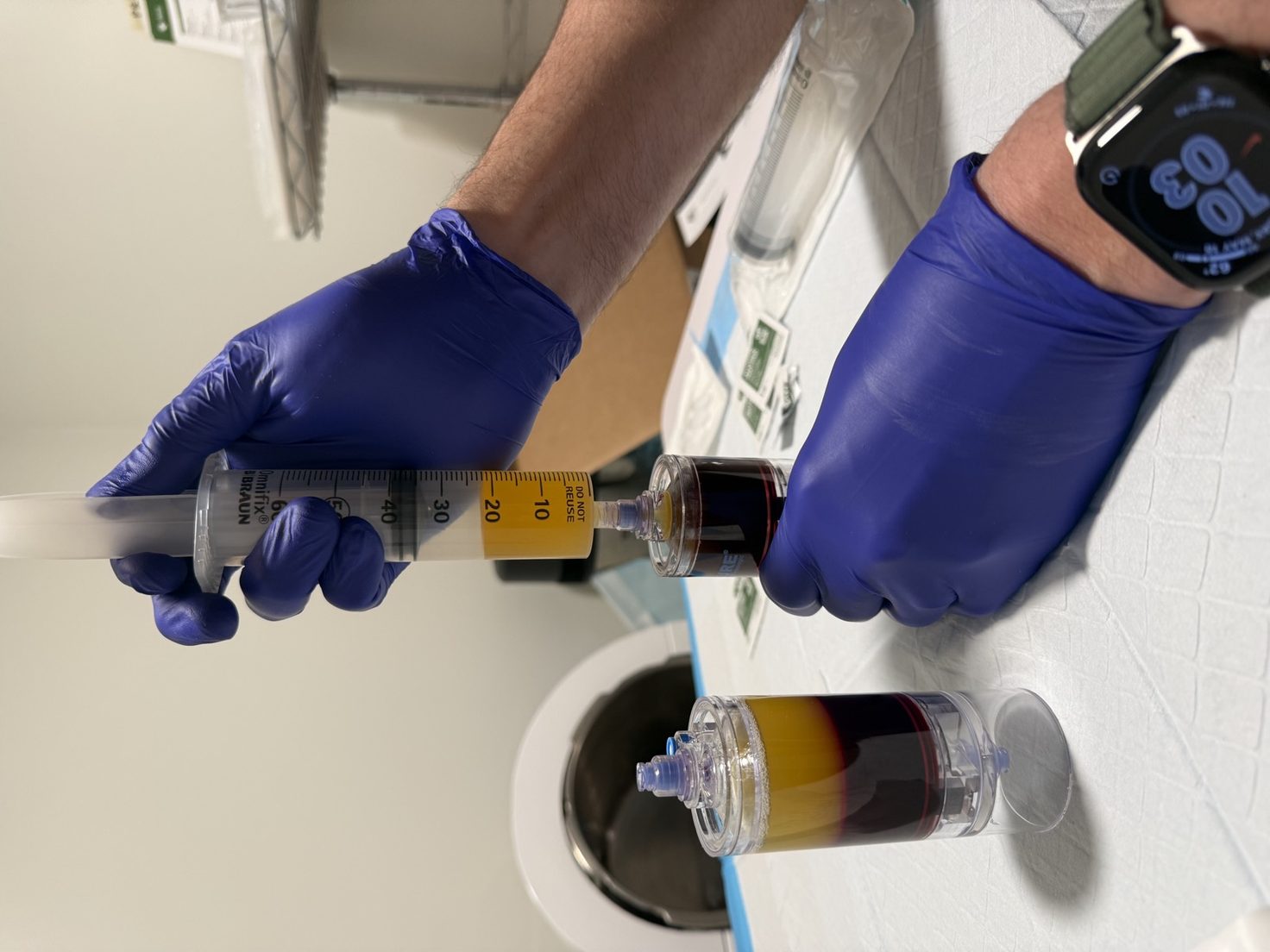
PRP therapy uses your own blood to help stimulate healing in injured tissue. The process begins with a simple blood draw—similar to what you’d experience during routine lab work.
That blood is then placed into a machine called a centrifuge.
What Does the Centrifuge Do?
The centrifuge spins your blood at a high speed, separating it into different layers. These layers include:
Red blood cells (sometimes called the hematocrit layer)
Plasma, a yellow-gold liquid that contains platelets
The plasma layer is where the magic happens.
Why Platelets Matter
Platelets play a critical role in healing. Anytime you experience an injury—whether it’s a tendon issue, muscle strain, ligament sprain, or joint irritation—platelets are the body’s first responders.
They rush to the injured area and release growth factors, which:
Signal the body to begin tissue repair
Help regulate inflammation
Support the rebuilding of damaged tissue
This response is the first phase of the healing process. Without it, healing simply doesn’t get started.
How PRP Injections Work
In PRP therapy, the platelet-rich portion of your blood is processed to concentrate the platelets, giving us a much higher dose of those healing growth factors.
That concentrated PRP is then injected directly into the injured tissue—such as a tendon, ligament, muscle, or joint.
Instead of waiting for your body to slowly mount a healing response, PRP helps kick-start and amplify that process. Think of it as giving your body a strong biological signal that says:
“Let’s heal—now.”
What Types of Injuries Is PRP Commonly Used For?
PRP is often considered for injuries that tend to heal slowly or become chronic, including:
Tendinopathies (like Achilles, patellar, or rotator cuff tendon issues)
Ligament injuries
Muscle strains that haven’t fully resolved
Joint pain related to overuse or degeneration
It’s especially useful when progress in physical therapy has plateaued despite good effort and consistency.
PRP and Physical Therapy: A Team Approach
It’s important to understand that PRP is not a standalone solution—and it’s not a replacement for physical therapy.
PRP creates the biological environment for healing. Physical therapy provides the mechanical guidance needed to make that healing meaningful and long-lasting.
After a PRP injection, physical therapy helps:
Gradually load healing tissue in a safe way
Restore strength, mobility, and coordination
Improve movement patterns and mechanics
Guide a safe return to work, sport, or daily activity
Without proper rehab, even the best biological healing can fall short.
What to Expect After a PRP Injection
Many patients expect immediate relief—but PRP doesn’t work like a cortisone shot.
In fact, it’s common to experience temporary soreness or stiffness after the injection. That’s often a sign that the healing response has been activated.
Improvement tends to happen gradually over weeks, not days. This timeline aligns perfectly with physical therapy, where controlled movement and progressive loading help direct the healing process.
Is PRP Right for Everyone?
PRP isn’t always the first step, and it isn’t necessary for every injury. Your physical therapist and medical provider will consider:
The type and severity of your injury
How long it’s been present
Your response to conservative care
Your goals and activity level
When used appropriately—and paired with the right rehab plan—PRP can be a valuable tool for helping stubborn injuries finally move forward.
The Bottom Line
PRP injections use your body’s own healing cells to help jump-start recovery in injured tissue. When combined with skilled physical therapy, PRP can help turn stalled progress into meaningful improvement.
If PRP has been recommended to you, think of it not as a shortcut—but as another tool to support the work you’re already doing in physical therapy.