
Why Your Muscles Stopped Responding
Your training hasn't changed. Your effort hasn't changed. But your results have. Here's the physiological explanation nobody gave you — and the intervention plan that actually works.
There's a conversation that happens in physical therapy clinics all the time. A man in his 50s comes in frustrated. He's been lifting for years. He eats reasonably well. He's not sedentary. But somewhere in the last few years, his body stopped cooperating. Recovery takes longer. Strength gains have stalled. The muscle definition he once had is fading despite the fact that nothing about his routine has dramatically changed.
He assumes it's just aging. He's half right.
What he's experiencing has a name: anabolic resistance. And while it's a normal part of the aging process for men, "normal" doesn't mean "inevitable" or "untreatable." Understanding it — and addressing it directly — is one of the highest-leverage things a man can do for his long-term health, function, and longevity.
What Is Anabolic Resistance?
Anabolic resistance is a reduced ability of muscle tissue to synthesize new protein in response to the stimuli it used to respond to — exercise, nutrition, and hormones. In plain terms: the same training and the same protein intake that once built or maintained muscle mass now produces a significantly blunted response.
This isn't laziness. It's not a plateau caused by stale programming. It's a measurable shift in how efficiently muscle cells respond to anabolic signals at the cellular level.
The bad news: it starts earlier than most men realize — subtle changes in muscle protein synthesis can begin as early as the late 30s. The good news: it responds well to targeted intervention, provided you know what you're actually dealing with.
What's Happening at the Cellular Level
To understand anabolic resistance, you need to understand four interconnected mechanisms:
1. mTORC1 Blunting
The mTOR signaling pathway is essentially the master switch for muscle protein synthesis. It gets activated by resistance exercise and by the amino acid leucine, and when it fires, it tells your muscle cells to build. With age, this pathway becomes increasingly desensitized — particularly to leucine. The switch still works, it just needs a stronger signal to flip.
2. Hormonal Decline
Testosterone, IGF-1, and growth hormone don't fall off a cliff overnight, but they do decline steadily through a man's 40s and 50s. These hormones directly regulate satellite cell activity — the repair and growth mechanism for muscle tissue — as well as overall protein turnover. Lower levels mean less anabolic drive even when training and nutrition are solid.
3. Chronic Inflammation
Aging is accompanied by a state of chronic low-grade inflammation sometimes called "inflammaging." This isn't the acute inflammation of a workout or an injury — it's a persistent background elevation of catabolic cytokines like TNF-α and IL-6 that actively suppress muscle protein synthesis. It's like trying to build a house while someone is slowly taking bricks away from the other side.
4. Mitochondrial Dysfunction
Muscle cells require substantial energy to repair and grow. Mitochondrial quality and oxidative capacity both decline with age, reducing the cellular energy available to power the protein synthesis process. This is one reason recovery slows — it's not just about soreness, it's about cellular energy economics.
Who's Most at Risk?
Age is the primary driver, but anabolic resistance exists on a spectrum — and modifiable lifestyle factors can dramatically accelerate or slow the process.
By decade, the general picture looks like this: men in their 30s are in an early stage where good training and nutrition largely compensate; by the 40s and 50s, the hormonal and recovery slowdown becomes more clinically relevant; from 60 onward, sarcopenia risk rises sharply; and into the 70s, the functional consequences — falls, frailty, metabolic disease — become significant.
But age alone doesn't tell the whole story. These risk factors substantially accelerate anabolic resistance regardless of age:
Sedentary lifestyle or extended detraining periods — even short gaps compound the problem
Low protein intake — anything below 1.2g/kg/day is inadequate; many men eating what they'd consider "healthy" are falling well short
Poor sleep quality or duration — this one is consistently underestimated
Chronic psychological stress — cortisol is catabolic; this isn't just a mental health issue
Hypogonadism or low testosterone — not just a sexual health concern, a musculoskeletal one
Obesity and metabolic syndrome — chronic insulin resistance impairs the anabolic signaling cascade
Excessive caloric restriction — crash dieting accelerates muscle loss disproportionately
Certain medications — corticosteroids and some statins have meaningful effects on muscle protein synthesis
How to Recognize It
Anabolic resistance doesn't announce itself with a diagnosis — it accumulates gradually and gets misattributed to generic "getting older" explanations. Here are the clinical signals worth paying attention to:
Plateau despite consistent training. No meaningful strength or hypertrophy gains over an 8–12 week block with structured programming isn't normal — it's a data point.
Disproportionate muscle soreness. DOMS extending beyond 72 hours after moderate-intensity sessions indicates impaired recovery, not heroic effort.
Slower recovery between sessions. Feeling under-recovered 48+ hours post-workout is a sign the anabolic response isn't keeping pace with the training stimulus.
Loss of muscle definition with stable body weight. Body composition is quietly shifting toward more fat and less muscle — this is the classic "skinny fat" trajectory that many men miss because the scale doesn't change.
Declining grip strength. Grip strength is one of the most validated proxies for systemic muscle health in the research literature. If it's dropping, the whole system is likely affected.
Increasing fatigue with activities of daily living. Stairs feeling harder. Carrying groceries requiring more effort. These aren't "just aging" — they're functional consequences of declining muscle mass.
Low testosterone on labs. Anything below 300 ng/dL warrants evaluation. Frequently co-occurring: low serum albumin, which points to protein insufficiency.
The Nutritional Response
This is where most men need the biggest recalibration, because the standard dietary advice is built on research in young adults and is meaningfully wrong for men experiencing anabolic resistance.
Raise total protein — significantly. The evidence-based target for men with anabolic resistance is 1.6–2.2g per kilogram of body weight per day. The RDA of 0.8g/kg is a minimum to prevent deficiency, not an amount to support muscle health. Most men eating what they consider a "high protein diet" are at the lower end of this range at best.
Think about leucine per meal, not just total daily protein. The mTORC1 pathway requires a threshold amount of leucine — approximately 2.5–3g per meal — to activate effectively. For men with blunted sensitivity, hitting that threshold typically requires 35–45g of protein at each meal. That's more than most men eat at breakfast by a wide margin. Spreading the same total protein across fewer, smaller portions wastes a significant portion of the anabolic potential.
Front-load your protein distribution. The common pattern — light breakfast, modest lunch, large dinner — is physiologically backwards. Three to four protein-adequate meals distributed across the day, with breakfast leading, optimizes the number of anabolic windows you're opening per day.
Post-exercise nutrition matters more, not less. For men with anabolic resistance, the post-training window is an opportunity that shouldn't be wasted. Consuming 40g or more of high-quality, leucine-rich protein within two hours of resistance training (whey performs particularly well here) directly addresses the blunted synthesis response.
Consider omega-3 supplementation. At 3–4g of EPA/DHA daily, omega-3s have demonstrated the ability to reduce inflammatory cytokine activity and improve mTOR sensitivity. This makes them one of the few supplements with a genuine mechanistic argument for anabolic resistance specifically, not just general health.
Creatine monohydrate is not optional. 3–5g daily. It's among the most thoroughly researched and consistently effective supplements for maintaining muscle mass and strength in men over 40. It's boring, it's cheap, and the evidence base is rock solid.
The Training Response
Here's what most training advice gets catastrophically wrong for this population: the solution to blunted anabolic response is not less training. It's more — and harder.
Volume needs to increase. General adults might do well with 10 sets per muscle group per week. Men with meaningful anabolic resistance need to be targeting 14–20 sets per week. The blunted sensitivity means you need a stronger stimulus to cross the threshold for adaptation.
Load matters — don't go lighter. Mechanical tension is the primary driver of hypertrophy. The idea that older men should shift to lighter weights and higher reps is not well-supported by the evidence and can become a self-fulfilling prophecy of muscle loss. Progressive overload — gradually increasing the challenge — matters more as you age, not less. Training in the 70–85% of 1RM range should remain on the table.
Prioritize compound movements. Squats, deadlifts, rows, presses — these recruit the most motor units, create the greatest systemic hormonal response, and produce the most anabolic stimulus per unit of time. They should be the foundation of the program, not an afterthought.
Train each muscle group more frequently. A single high-volume day per muscle group per week becomes increasingly inefficient with age. Three sessions per week per muscle group — with moderate volume per session — consistently outperforms one-day-per-week approaches in older trainees. More frequent, moderately-dosed stimulation is what the physiology calls for.
The Variables Nobody Talks About Enough
Here's what most training advice gets catastrophically wrong for this population: the solution to blunted anabolic response is not less training. It's more — and harder.
Training and nutrition do the heavy lifting, but three additional variables can make or break the results — and they're frequently treated as lifestyle preferences rather than clinical inputs.
Sleep is anabolic medicine. Approximately 80% of growth hormone secretion occurs during deep sleep. Short sleep duration — less than six hours per night — has been shown to reduce testosterone levels by up to 15%. Chronic sleep deprivation creates the equivalent of a hormonal headwind that no amount of training or protein will fully overcome. If there's undiagnosed sleep apnea in the picture, addressing it should be a clinical priority.
Stress management is not soft science. Cortisol is directly catabolic — chronically elevated levels actively promote muscle protein breakdown and directly suppress testosterone synthesis. The mechanisms are well-established. Heart rate variability training, structured recovery periods, and breathwork practices have measurable effects on the cortisol-testosterone balance and belong in the clinical conversation about muscle health.
Hormonal status deserves a real evaluation. If a man presents with the symptoms described above — persistent plateau, declining strength, fatigue, recovery impairment — a testosterone panel is appropriate. Testosterone below 300 ng/dL in a symptomatic patient warrants a conversation about options, including testosterone replacement therapy. Vitamin D optimization (targeting 50–70 ng/mL serum levels) is also frequently overlooked and directly relevant to testosterone synthesis. And we MUST be checking Free Testosterone, not just total testosterone.
What Physical Therapists Can Do
Physical therapists are uniquely positioned to identify and intervene on anabolic resistance — and most aren't fully utilizing that position.
The screening toolkit is accessible: grip strength dynamometry, functional movement assessment, wall-sit test, and a simple dietary recall for protein adequacy. These are brief, low-cost, and extraordinarily informative. A patient who comes in for a knee complaint may also be showing early signs of systemic muscle health decline that no one else in their healthcare circle is going to catch.
The PT's role doesn't stop at assessment. Prescribing and progressively loading resistance programs with appropriate volume and intensity, educating patients on the physiological reality of what they're experiencing, and coordinating care with primary care physicians and registered dietitians — this is the full scope of the intervention. Patients respond remarkably well when someone explains why their body changed and gives them a concrete, evidence-based plan to address it. Most men have been quietly assuming decline is inevitable. Finding out it isn't is motivating in a way that generic "exercise more" advice never is.
The Bottom Line
Anabolic resistance is not a diagnosis of inevitable decline. It is a physiological state — modifiable, treatable, and highly responsive to the right inputs. The men who navigate it best are the ones who understand what's happening, stop blaming themselves for a plateau that isn't their fault, and make the targeted adjustments that the physiology actually calls for.
More protein per meal. Heavier training with more volume. Better sleep. Managed stress. Hormones evaluated, not assumed.
This is what education as an intervention looks like in practice. Not a pep talk. A clinical roadmap.
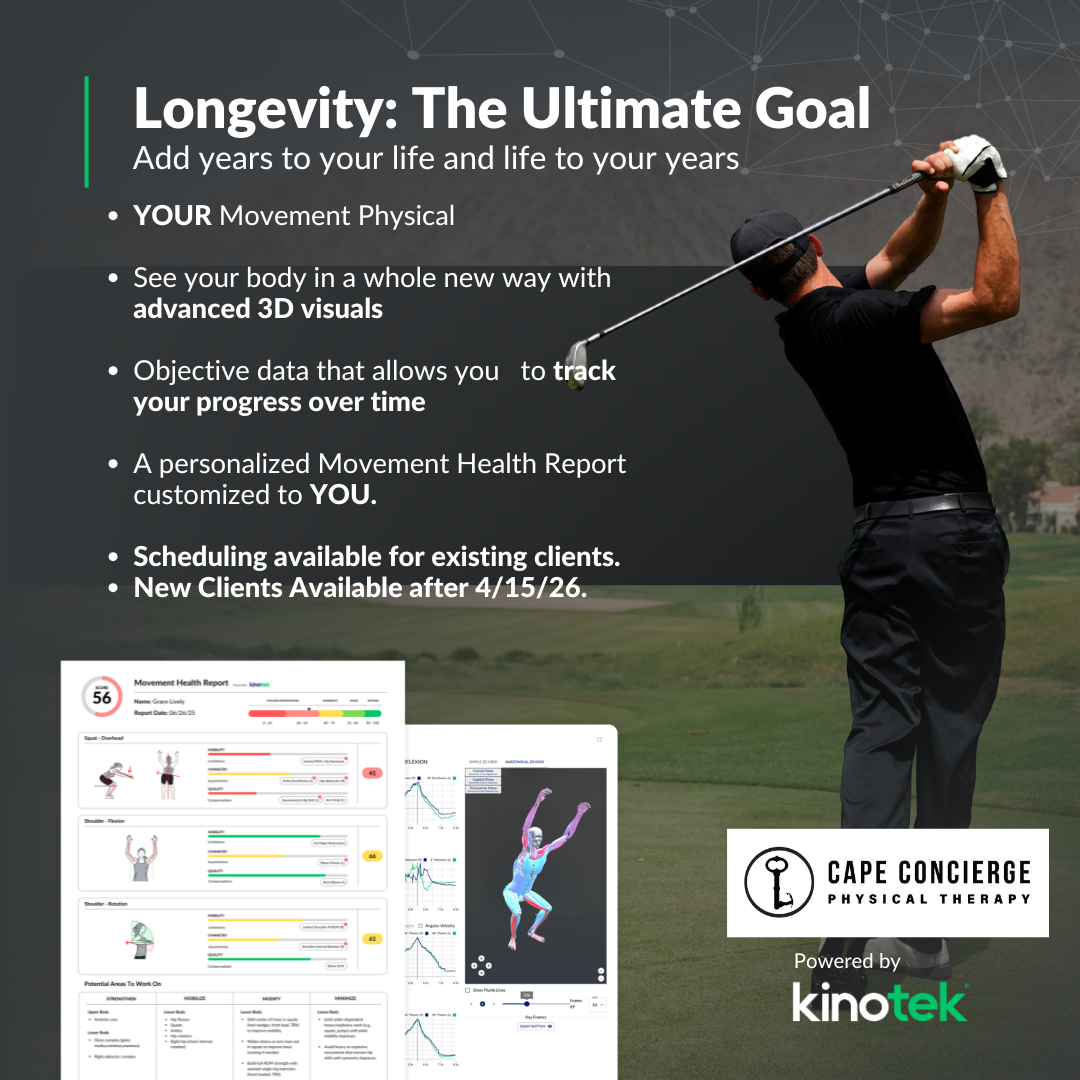
Cape Concierge Physical Therapy offers preventative PT, functional movement screenings, and educational programming for men and women across the Cape and South Shore. If you're experiencing the signs described in this article, a Movement Physical assessment is a good place to start.