Muscle is the organ that decides how well you age.
Why muscle gets harder to keep after 40, and the three things that actually move the needle.
Ashley Katzenback, PT, DPT · 3 min read
Hi Friend,
If there's one topic I keep coming back to with patients this fall, it's muscle. Not for how it looks. For what it does.
Muscle is the tissue that gets you up off the floor, carries the groceries, catches you when you trip, and clears most of the sugar from your bloodstream after a meal. In large studies, something as simple as grip strength predicts how long people live. We have started calling muscle your longevity organ, and we mean that literally.
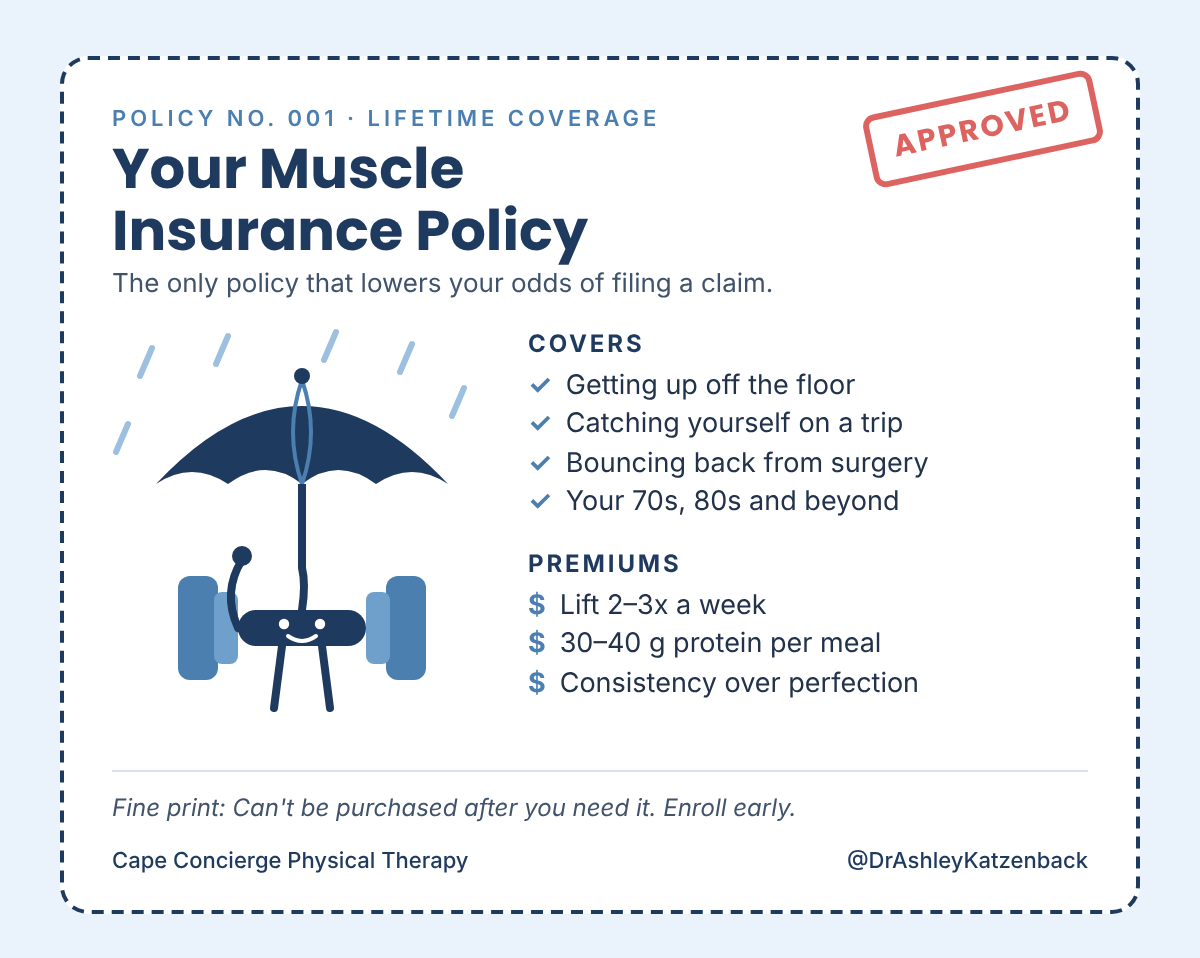
Think of it like disability insurance
Nobody buys disability insurance the day they get hurt. You pay small premiums for years, so the coverage is there when you need it.
Muscle works the same way. The premiums are a few strength sessions a week and enough protein on your plate. The claim is a fall, a surgery, an illness, or simply your 70s. And you can't build it in a hurry once that day comes.
There's one way muscle beats any policy you can buy: the more you have, the less likely you are to ever file the claim.
Why it gets harder after 40
Most adults lose roughly 3 to 8 percent of their muscle per decade starting in their 30s, and the pace picks up after 60. For women, the drop in estrogen around menopause speeds up muscle and bone loss together. If you're on a GLP-1 medication, a meaningful share of the weight you lose can be muscle unless you protect it.
There's also something called anabolic resistance. As we age, muscle gets less responsive to the signals that tell it to grow. The good news: it still grows. It just needs a bigger dose of the right inputs.
The three things that actually move the needle
1. Lift with intent, 2 to 3 times a week. Squats, hinges, presses, rows, carries. Use a weight where the last two or three reps are genuinely hard, and add load gradually over time. Yoga, Pilates, and walking are great, but they don't replace lifting weights.
2. Get 30 to 40 grams of protein at each meal. Older muscle needs more protein per meal to switch on muscle building, and spreading it across the day beats one big dinner. Consistency matters more than your weekly average. For a 160-pound woman who trains, that often lands somewhere between 100 and 145 grams a day. If you are struggling with this, an appointment with our nutritionist, Stephanie Tarbell, may be just what you need.
3. Consider creatine. Creatine monohydrate is one of the most studied supplements out there. At 5 grams a day, paired with strength training, it supports muscle, bone, and even brain health. It works best alongside lifting, not instead of it. We love the Momentous Brand and if you use our link you can get up to 35% off your first order.
Start with where you stand
You can't build a plan for a body you haven't measured. Our Movement Physical uses 3D Kinotek screening, grip testing and skeletal muscle measures to look at how you move, where you're compensating, and what's holding you back, so your strength plan fits your body and your goals.
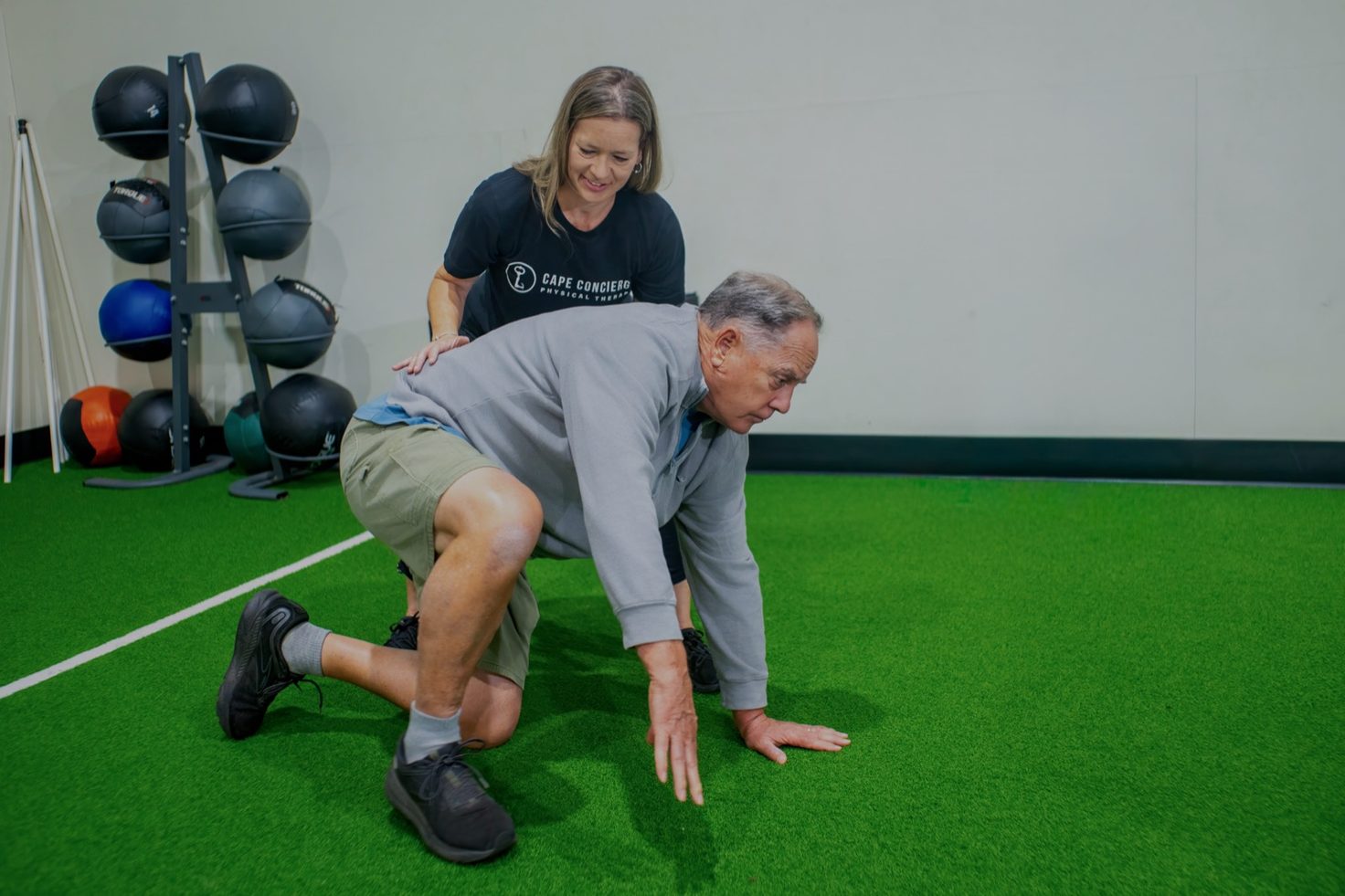
Mom & Dad, Don't Skip Leg Day!!!
A 10-year study of twins found leg strength predicted brain health a decade later. Why leg day matters more with age — for cognition, not just mobility.
Read the full article →
What a Harvard Study Says About Living Longer
The strongest predictor of a long, healthy, happy life wasn't wealth, status, or cholesterol. It was the warmth and quality of close relationships.
Read the full article →