Why we love Creatine and our latest Podcast recap on RED-S.

Dr. Darren Candow: The Myths, Facts, and Vast Benefits of Creatine Supplementation
This is the one podcast episode I end up sharing with patients more than almost any other — so l wanted to pass it along to all of you too. (Episode linked below)
Dr. Darren Candow runs the Aging Muscle and Bone Health Lab at the University of Regina and has published 100+ studies on creatine. A lot of what I hear from patients about creatine is outdated or just plain wrong.
Quick myth-busting: X It causes hair loss → no solid evidence for this X It dehydrates you / hurts your kidneys → not supported in healthy adults; the water it pulls in actually helps muscle function X You need to cycle on and off → no evidence needed; long-term daily use (even 2 years) shows no adverse effects
What it actually does: Beyond strength and power, the research points to real benefits for bone density, blood sugar regulation, brain health, recovery, and even post-concussion recovery. That bone and brain piece is a big deal — especially for anyone thinking ahead about osteoporosis risk or staying sharp long-term.
•
How much, and when: Loading: 20g/day for 7 days (fastest saturation) Maintenance: 5g/day Bodyweight-based: ~0.1g/kg (usually 7-10g/day)
Take it after a workout rather than with caffeine, and pairing it with protein may help absorption. If you're worried about water retention, skip the loading phase and just start at 3-5g daily. Who tends to benefit most: postmenopausal women, vegetarians/vegans, older adults working to preserve muscle, and — when paired with resistance training — basically anyone focused on longterm strength and bone health.
If this has you rethinking your supplement shelf (or wondering what else might be worth adding to your strength and longevity plan), a Movement Physical is a great place to start that conversation.
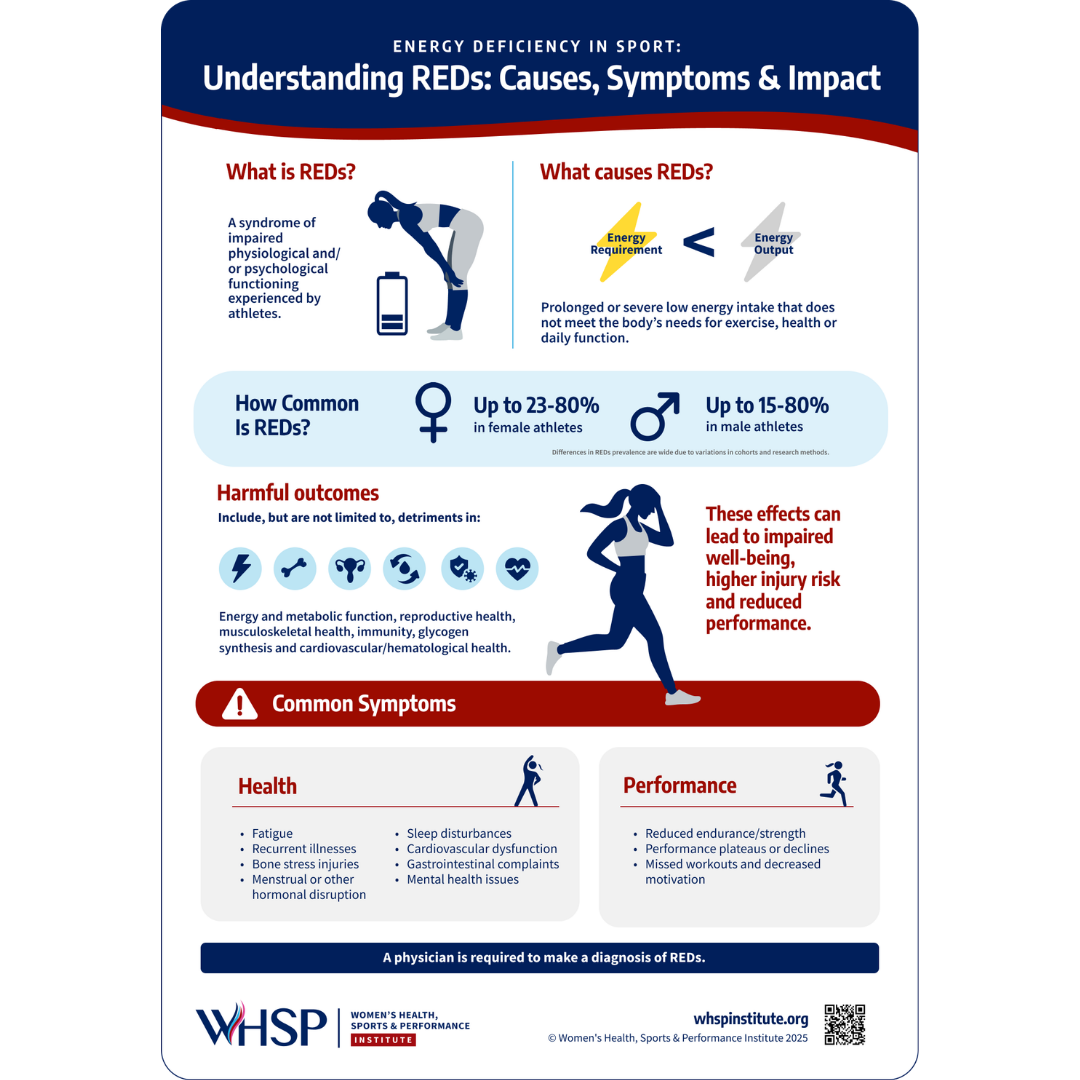
ENERGY DEFICIENCY IN SPORT: Understanding REDs: Causes, Symptoms & Impact
What is REDs?
A syndrome of impaired physiological and/ or psychological functioning experienced by athletes.
What causes REDs?
Energy Energy Output Requirement <
Prolonged or severe low energy intake that does not meet the body's needs for exercise, health or daily function.
How Common Is REDs?
Up to 23-80% in female athletes
Up to 15-80% in male athletes
Differences in REDs prevalence are wide due to variations in cohorts and research methods.
Harmful outcomes Include, but are not limited to, detriments in:
en
Energy and metabolic function, reproductive health, musculoskeletal health, immunity, glycogen synthesis and cardiovascular/hematological health.
These effects can lead to impaired well-being, higher injury risk and reduced performance.
A Common Symptoms
Health
• Sleep disturbances
• Fatigue
• Cardiovascular dysfunction
• Recurrent illnesses
• Gastrointestinal complaints
• Bone stress injuries
• Menstrual or other
• Mental health issues hormonal disruption
Performance
• Reduced endurance/strength
• Performance plateaus or declines
• Missed workouts and decreased motivation
A physician is required to make a diagnosis of REDs.
WOMEN'S HEALTH, SPORTS & PERFORMANCE INSTITUTE
whspinstitute.org @ Women's Health, Sports & Performance Institute 2025
